Choosing between FOB and CIF is one of those decisions that sounds procedural but turns out to be consequential. Incoterms decide who arranges shipping, who pays for it, and, most importantly, who carries the risk if something goes wrong between the workshop in Jepara and the dock at your destination port. For hospitality buyers sourcing from an Indonesia furniture manufacturer or supplier for the first time, the choice shapes how much control you have over the shipment, how much friction you deal with during transit, and how much protection you actually have if a container arrives damaged. What follows is a Q&A for procurement teams making this call, with attention to what the choice actually means in practice rather than only in the glossary.
In this article
What is the difference between FOB and CIF for furniture shipping?
The core difference between FOB and CIF is who arranges and pays for the ocean freight and insurance from origin to destination. The surprising part, and the one that trips up most first-time buyers, is where the risk actually passes between seller and buyer. Under both Incoterms, the risk transfers at the same point: the moment the goods are on board the vessel at the origin port.
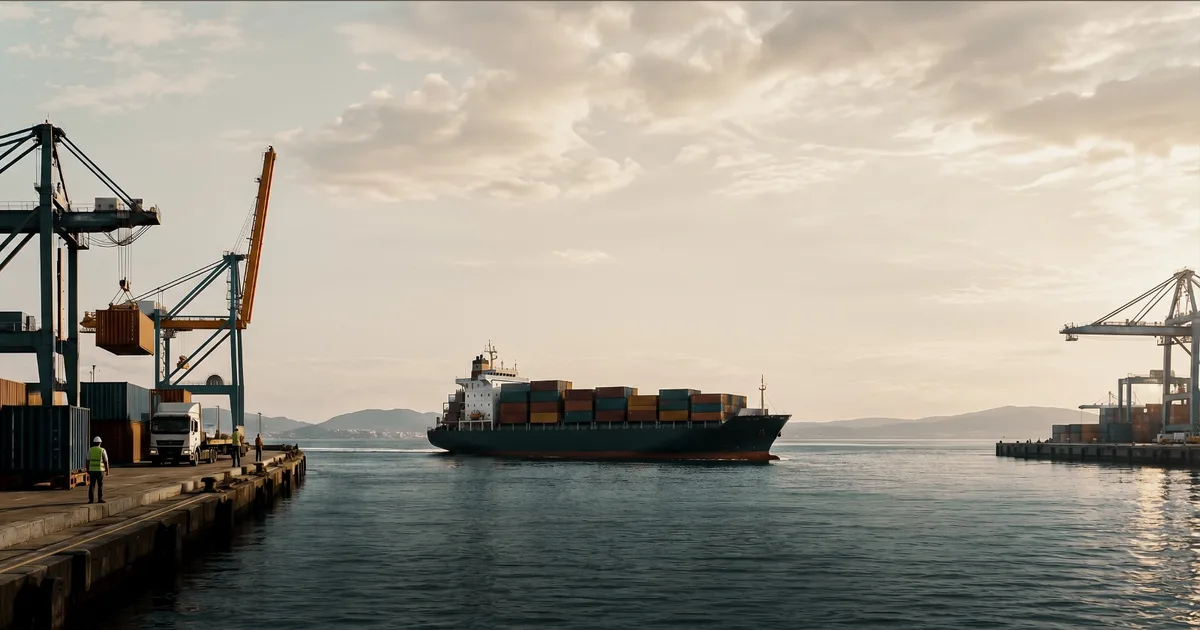
FOB, which stands for Free On Board, means the seller handles everything up to the moment the furniture is loaded onto the vessel at the Indonesian port (typically Semarang, Surabaya, or Jakarta for furniture originating in Java). The seller is responsible for export clearance, inland transport from the workshop to the port, and loading onto the vessel. The buyer arranges and pays for ocean freight, insurance, destination handling, and import clearance, and carries the risk from the moment the container is loaded on board the vessel.
CIF, which stands for Cost, Insurance and Freight, means the seller pays for ocean freight to the named destination port, and arranges a minimum level of insurance coverage. This is convenient for buyers who prefer a single party handling the logistics. The subtlety that catches people out: the risk still transfers to the buyer at the origin port, the same point as FOB, even though the seller is paying for the carriage and insurance.
This distinction between cost responsibility and risk responsibility is where most of the practical differences between FOB and CIF show up. Understanding it changes how you evaluate quotes and how you plan for the possibility of things going wrong.
How does the risk transfer point actually affect a hospitality buyer?
The risk transfer point matters because it determines who is responsible for making an insurance claim if the furniture is damaged or lost during ocean transit. Even when the seller is paying for insurance under CIF, the buyer is the party who files the claim and pursues recovery.
Here is what this means in practice. Suppose a container of hospitality furniture ships CIF from Semarang to Jebel Ali, and the vessel encounters rough weather during transit. The cargo is damaged. The seller has paid for ocean freight and minimum insurance under CIF terms. But because the risk transferred to the buyer the moment the container was loaded in Semarang, the buyer is the party who files the insurance claim at destination. The seller has fulfilled their obligation by paying for the policy. They are not obligated to pursue the claim or make the buyer whole beyond what the policy covers.
For a hospitality property with a hard opening date, this matters significantly. A damaged container at destination means your furniture may not be installable in time for your opening. The insurance payout may eventually arrive, but it will not restart the production cycle in Jepara. You are now looking at either a rush production reorder (if your manufacturer can accommodate it) or an opening with incomplete FF&E.
Understanding this risk transfer point does not change the Incoterm choice by itself, but it does change how buyers think about insurance coverage, communication with the carrier, and contingency planning for schedule-critical hospitality projects.
Why do many experienced hospitality buyers prefer FOB?
Experienced hospitality buyers often prefer FOB because it gives them direct control over three variables that matter more than the convenience of CIF: carrier selection, insurance adequacy, and visibility during transit.
Carrier selection matters because not all ocean carriers are equally reliable for furniture shipments. Some carriers specialize in certain trade lanes with better transit times and schedule reliability. Some have better claims handling if damage occurs. Buyers with existing freight forwarder relationships know which carriers work for their trade lane and can book accordingly. Under CIF, the seller chooses the carrier, usually based on their own commercial relationships rather than yours.
Insurance adequacy is a larger factor than most first-time buyers realize. The minimum insurance required under CIF (Institute Cargo Clauses (C)) is basic coverage that protects against total loss and major perils but leaves significant gaps for damage scenarios that commonly affect hospitality furniture, such as water damage to upholstered pieces or impact damage during handling. Hospitality buyers typically want broader, all-risks coverage under Institute Cargo Clauses (A), insured to full replacement value, which the standard CIF minimum does not provide. Many CIF buyers end up arranging top-up insurance anyway, which eliminates one of the main conveniences of the term.
Transit visibility is often better under FOB arrangements because the buyer's own freight forwarder is tracking the shipment on their behalf and reporting back with updates. Under CIF, you depend on the seller to relay information from a carrier they chose, which can introduce delays in getting updates when they matter most.
For hospitality buyers shipping multiple containers per year, FOB also typically produces better unit economics because volume relationships with forwarders are already in place. For single-container or occasional shipments, the volume advantage is less pronounced.
When does CIF actually make sense for a hospitality buyer?
CIF makes sense for hospitality buyers in specific circumstances, particularly for occasional shipments where the operational simplicity outweighs the control advantages of FOB.
The scenarios where CIF typically works well include:
- First-time buyers who are still establishing relationships with freight forwarders and want to minimize the number of parties they need to coordinate for their initial shipment.
- Small-volume shipments where the buyer does not have the volume to negotiate meaningful freight rates independently.
- Destinations where the buyer does not have existing freight forwarder relationships and would otherwise be shopping cold for a one-off arrangement.
- Projects where the hospitality operator has decided to delegate logistics complexity to the supplier as part of the sourcing arrangement.
For these buyers, the simplicity of CIF (one party, one point of contact, one invoice line for landed cost up to the destination port) can be worth the trade-offs. The important caveat is to arrange top-up insurance to full replacement value, rather than relying on the minimum coverage that comes with CIF by default. This protects the buyer against the gap in standard CIF insurance while still benefiting from the operational simplicity.
Some buyers also use CIF for their initial shipment with a new supplier, then transition to FOB for subsequent orders once they have established their own forwarder relationships and understand the trade lane. This is a reasonable progression that balances convenience early with control later.
The honest conversation with your supplier is worth having. A reputable Indonesia furniture manufacturer or supplier should be able to quote both FOB and CIF comfortably, explain the differences without pressure in either direction, and let the buyer decide based on their own circumstances. Suppliers who only quote one or the other, or who push aggressively toward CIF with claims that it is cheaper (it usually is not, once insurance adequacy is accounted for), are often optimizing for their own simplicity rather than the buyer's needs. How a supplier handles this conversation is also a useful signal when you are evaluating Jepara furniture suppliers for hospitality projects.
What is the practical middle path between FOB and CIF?
A practical middle path that many experienced hospitality buyers use is to quote and contract FOB, then handle both freight and full-value insurance themselves. This combines the control of FOB with the clarity of having risk and insurance coverage clearly aligned in one set of hands.
Under this arrangement, the manufacturer handles production, export documentation, inland transport from the Jepara workshop to the origin port, and loading onto the vessel. From that point, the buyer's appointed freight forwarder takes over, with insurance coverage arranged by the buyer to full replacement value under appropriate Institute Cargo Clauses coverage. The buyer sees the complete freight cost separately from the furniture cost, which makes budgeting cleaner and comparison between quotes easier.
The practical advantages of this approach are several. The buyer knows exactly what they are paying for freight versus furniture, which supports cleaner cost accounting and clearer comparison between suppliers. The insurance coverage is matched to the buyer's actual exposure, not to a minimum contractual standard. The freight forwarder works for the buyer directly, which simplifies communication during transit and claim handling if damage occurs. The buyer builds a relationship with a forwarder that will be useful for future shipments.
For hospitality buyers planning multiple shipments over the lifetime of a property (initial FF&E delivery plus future refurbishment phases), building this forwarder relationship early pays dividends later. For a single-shipment project, the setup effort may not be worth it, and CIF with top-up insurance may be the simpler choice.
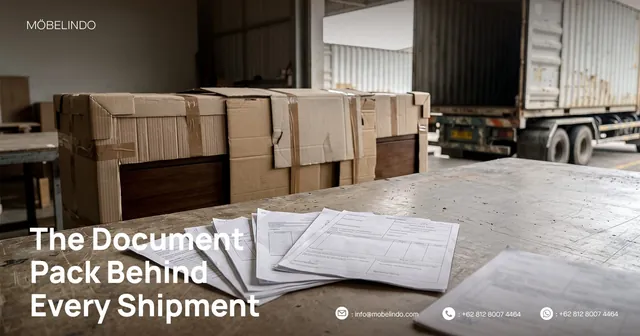
For a deeper discussion of how freight terms affect the comparison between quotes from different suppliers, our earlier post on reading hospitality furniture quotes covers the broader framework. For context on documentation that accompanies the shipment regardless of Incoterm, our earlier post on hospitality furniture shipment documents covers each of the required paperwork categories.
Shouldn't containerised furniture ship under FCA or CIP instead?
Strictly speaking, the ICC recommends it. The Incoterms 2020 rules note that FOB and CIF were designed for goods loaded directly onto a vessel, and that they may not be appropriate when goods are handed to the carrier before they are on board, which is normal for containers delivered to a port terminal.
For containerised cargo, the ICC points to FCA (Free Carrier) and CIP (Carriage and Insurance Paid To), under which risk passes when the container is handed over to the carrier. CIP also requires a higher default level of insurance, Institute Cargo Clauses (A), rather than the (C) level under CIF.
In practice, FOB and CIF remain the terms many furniture buyers, banks, and freight forwarders still work with, largely out of long-established habit on these trade lanes. Either approach can work, as long as the contract is clear about where risk passes and what the insurance covers. If you prefer FCA or CIP, raise it at the quotation stage so the invoice and shipping documents reflect it from the start.
How should the Incoterm choice be reflected in your contract?
The Incoterm choice should be reflected explicitly on the commercial invoice, in the purchase order, and in any supply agreement between the buyer and the supplier. Ambiguity about Incoterms is a common source of friction when things go wrong, and clarity in writing prevents most of those disputes.
The commercial invoice should state the Incoterm using the standard three-letter abbreviation (FOB Semarang, FOB Surabaya, CIF Jebel Ali, CIF Los Angeles, or whichever port combination applies), with the specific port named rather than left generic. The year of the Incoterms version should be referenced (for example, "FOB Semarang, Incoterms 2020"), as the current version differs in some details from earlier versions.
The purchase order and supply agreement should spell out which party is responsible for each component of the shipment process (export clearance, inland transport, loading, ocean freight, insurance, destination handling, import clearance), and under what Incoterm standard. For CIF arrangements specifically, the level of insurance coverage should be specified beyond the minimum, so that the seller cannot default to the lowest coverage simply because the Incoterm allows it.
For buyers working with a freight forwarder, the forwarder can review the Incoterm specification in the quote and flag any gaps or ambiguities before the purchase order is signed. This is one of the practical benefits of involving your forwarder early in the sourcing process, rather than only after the supplier is selected.
Any changes to the Incoterm during the course of the shipment (for example, switching from FOB to CIF because freight arrangements fall through) should be documented in writing with mutual agreement before the change takes effect. Informal verbal changes to Incoterms during a shipment have been the source of disputes significant enough to end supplier relationships.
A Five-Point Checklist Before Finalizing Your Incoterm Choice
Before committing to an Incoterm for your hospitality furniture shipment, five questions help clarify whether your choice fits your project circumstances.
- Do you have existing freight forwarder relationships at your destination port, or are you building these relationships from scratch for this shipment?
- Is this a single-container occasional shipment, or part of a larger pattern of shipments where volume relationships with carriers will develop over time?
- What is the acceptable level of risk if the container is damaged in transit, and does the insurance coverage you will have in place match that risk tolerance?
- How critical is schedule certainty for your hospitality opening or installation window, and does your Incoterm choice support appropriate transit visibility and contingency planning?
- Have you confirmed in writing that the commercial invoice, purchase order, and any supply agreement all state the same Incoterm consistently and reference the specific port involved?
A Closing Note
The Incoterm choice between FOB and CIF is not a technicality. It shapes who controls the shipment, who carries the risk, and who has the standing to make things right when something goes wrong. For hospitality buyers working with a teak furniture manufacturer in Jepara or an Indonesia furniture supplier more broadly, taking the time to understand what each Incoterm actually commits you to pays off whether the shipment goes perfectly or hits turbulence somewhere along the way.
Furniture that arrives damaged at a hotel weeks before opening is not a freight problem. It is a schedule problem, a budget problem, and often a guest experience problem for the first weeks of operation. The Incoterm choice is one of the few decisions you make early in the sourcing process that directly affects your ability to respond when any of these problems appear.
If you are weighing FOB against CIF for a specific hospitality project, the Mobelindo team is glad to talk it through with you. We can quote both FOB and CIF so you can compare them side by side and choose what fits your shipment. Reach us on WhatsApp at +62 812 8007 4464 or by email at [email protected]. No pressure and no obligation, just a practical conversation about your project.