





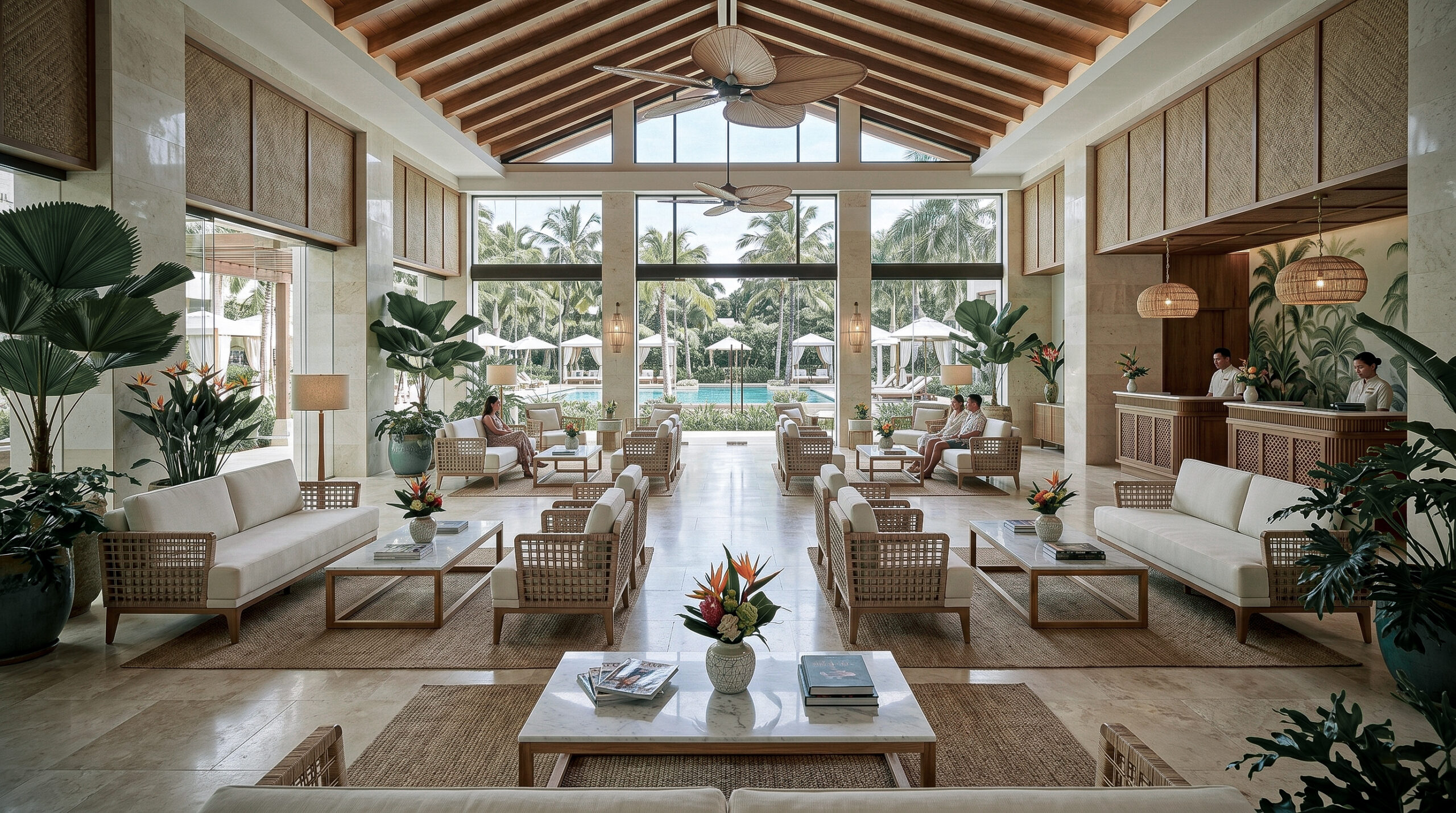
Choosing a furniture vendor for a boutique hotel project is rarely just about price or aesthetic. For a procurement director or hospitality developer, it is at its core a form of risk management. Every specification detail missed at the sourcing stage becomes an operating cost later. Every shipping delay becomes a compromise on opening day.
This is a guide written from the manufacturer’s side of that conversation. What follows is what boutique hotels tend to require from their manufacturing partners, based on the briefs that land on our desk and the projects we have delivered across international and national hospitality markets over the past several years.
1. Customization That Respects Both Design Intent and Production Reality
Boutique hotels build their identity on uniqueness. You are rarely sourcing from a standard catalogue. You are asking a manufacturer to translate a designer’s vision into a production-ready reality, and to do so consistently across every unit in the order.
Two things separate manufacturers who can serve this well from those who cannot.
The first is fluency in materials the client owns or specifies directly. When a boutique brand ships in a specific fabric, a fire-retardant foam grade, or custom hardware for their case goods, the manufacturer has to handle those inputs without treating them as an obstacle. Managing COM (Customer’s Own Material) or COL (Customer’s Own Leather) inputs cleanly, with clear receiving protocols, storage discipline, and integration into the production schedule, is a signal of an experienced hospitality partner. A manufacturer who treats COM as a favour, rather than as standard practice, will eventually create friction that shows up in the finished product.
The second is the ability to speak the interior designer’s language. Not just the aesthetic vocabulary, but the technical one. Radius specifications. Joinery preferences. Finish depth. When the designer asks for a two-millimetre chamfer on all visible edges, the manufacturer should not have to ask what a chamfer is. This sounds obvious. In practice, it is one of the most common gaps in boutique hotel FF&E delivery.
2. Hospitality-Grade Construction as an Operating Decision
There is a fundamental difference between residential furniture and furniture built for a lobby lounge chair used by three hundred different guests every week. The materials might look similar. The construction is not.
Joinery has to be tighter. Frames have to be reinforced. Finish systems have to survive repeated cleaning cycles with commercial-grade products that would strip residential finishes within months. Fasteners have to withstand the cycling that comes from thousands of small movements over years.
The reason procurement teams care about this level of construction is straightforward. Furniture that fails within the first eighteen months of operation moves from the capital expense line to the operating expense line, and stays there. A wardrobe that needs its drawer slides replaced costs the property in hardware, in labour, in room downtime, and in the guest experience during the maintenance window. For an 80-room boutique property, that pattern of failures across a single category of piece can shift the annual FF&E maintenance budget by a real percentage. Multiply that by property groups running multiple properties, and you understand why hospitality developers spend serious time on construction specifications before they spend time on visual mock-ups.
For solid wood pieces specifically, the fundamentals sit at the material level before they sit at the construction level. Kiln drying to a controlled moisture content, appropriate for the destination climate, is the single most important upstream decision. A piece of teak that arrives at the property at fourteen percent moisture content when the ambient environment is eight percent will move, no matter how well the joinery was executed. On our shop floor, we hold moisture content targets between eight and twelve percent depending on the destination climate, and we verify them with pinless capacitance meters at multiple production stages rather than only at final QC.
3. Sourcing Discipline and Export Documentation
For hospitality projects that involve international shipping, the manufacturer’s discipline around export documentation has become as important as their discipline around construction.
The requirements have tightened over the last several years. Chain-of-custody documentation for timber. Moisture content records. Finish material safety data sheets. Packing lists that match commercial invoices at the unit level, not just at the container level. Fumigation certificates. Country-of-origin declarations. For EU-destination shipments after 30 December 2026, EUDR-compliant due diligence statements will become mandatory across the entire value chain, from timber source to finished piece.
Manufacturers who treat documentation as a paperwork exercise, generated on the day the container ships, are creating risk for the procurement team. Manufacturers who treat documentation as part of the production process, generated as the project moves through each stage, produce shipments that clear customs cleanly and reach the property on schedule.
This is worth asking about early in a supplier conversation. A manufacturer who cannot show you their documentation workflow before you sign a purchase order is unlikely to produce it cleanly when the container is already on the water. In our practice, documentation for a project accumulates alongside production: kiln drying records generated at the drying stage, hardware certificates filed at receiving, finish system documentation filed as coatings are applied, and the final export packet assembled from files that already exist rather than from files that need to be created retroactively.
4. Lead Time as a Commitment, Not an Estimate
Hospitality construction schedules are unforgiving. The property is opening on a date driven by pre-sold room nights, brand marketing calendars, and investor commitments. The FF&E has to be in place, unpacked, inspected, and installed by a date that was set eighteen months earlier.
Manufacturers who quote lead times as a range with soft edges are signalling something about how they run their production floor. Manufacturers who commit to a specific timeline and share their production math openly, from timber reservation to kiln drying to machining to finishing to packing to loading, are signalling something different.
For a boutique property opening in Q4 of any given year, the FF&E specification lock-in typically needs to happen twelve to fourteen months earlier, with production kicking off six to eight months before delivery, and ocean freight adding four to six weeks depending on destination. Working backward from an opening date, the calendar is tighter than most procurement teams initially assume, particularly for orders that require multiple sample rounds before bulk approval.
For boutique projects, one container is often the ideal order size. It matches the property scale. It matches the shipping economics. It matches the cash flow discipline. A manufacturer who can serve one-container orders with the same production discipline they would apply to a ten-container order is the right operational fit for boutique hospitality. A manufacturer who is happy to take the order but quietly stretches the schedule to fit it around larger clients is not.
Lead time discipline also shows up in how the manufacturer handles changes. Every project has changes. Sample revisions, spec adjustments, quantity updates, added SKUs late in production. A partner who can absorb reasonable changes without pushing the shipping date, or who can quantify the schedule impact clearly and immediately if the change is significant, is the partner who protects the property’s opening date. Silent absorption of changes that later cause delays is one of the most damaging patterns a manufacturer can develop.
5. Value Engineering as a Design Conversation, Not a Cost-Cutting One
The last piece of the FF&E specification conversation is one that gets undersold. Value engineering, done well, is a design conversation. It is a manufacturer telling the procurement team where the specification can be adjusted to protect the design intent while managing budget realities.
Some examples from projects we have worked on.
A designer specified a large solid teak face on a wardrobe panel. At that dimension, we noted, the panel would move seasonally regardless of drying protocol, and suggested a solid teak frame with a veneered inset that reads identically from normal viewing distance and stays flat over the operating life of the piece. That is value engineering.
A designer specified a particular imported hardware brand with a twelve-week lead time that would have pushed the container date. We offered a functionally identical piece from a supplier we had qualified through prior projects, with a two-week lead time and similar finish quality. That is value engineering.
A designer specified a stain colour that was difficult to match consistently across a large production run, particularly across boards with different grain patterns. We offered a marginally adjusted formulation that read visually identical, cleared multiple mock-up rounds, and produced more consistently across the full order. That is value engineering.
What is not value engineering is quiet substitution. A manufacturer who swaps a material, a hardware source, or a construction method without explicit approval is not doing value engineering. They are creating a risk that surfaces on site, often after the property has already opened. Boutique hotel procurement teams learn quickly which manufacturers understand the difference.
What Actually Matters
The manufacturers who serve boutique hospitality well over multiple projects are, in our experience, the ones who see the vendor relationship as a technical partnership. They ask about the operating context, not just the specification. They flag constraints early, not late. They document their process, not just their product. They protect the opening date the way the procurement team would protect it.
None of this is glamorous. It shows up in emails, in shop-floor discipline, in packing crate quality, in the calmness of the last container arriving on time. But it is the difference between a boutique hotel FF&E delivery that ages into the property and one that becomes a source of recurring maintenance conversations two years in.
For procurement teams beginning a new boutique project, the questions worth asking early are not about catalogue availability. They are about how the manufacturer runs their production floor, how they document their process, and how they think about the operating life of the pieces they build.
Those answers tell you far more than any brochure.
Frequently Asked Questions
What is the ideal minimum order quantity for a boutique hotel FF&E project?
For most boutique properties, one container’s worth of furniture is the right order size. It aligns with property scale, matches shipping economics, and keeps cash flow disciplined. A manufacturer who can serve single-container orders with the same production discipline they apply to larger clients is a strong operational fit for boutique hospitality.
How long should a boutique hotel plan for FF&E production and delivery?
Working backward from an opening date, plan for twelve to fourteen months from specification lock-in to delivery. Production alone typically runs six to eight months for a full property order, with sample rounds and approvals before that, and ocean freight adding four to six weeks depending on destination.
How does COM (Customer’s Own Material) sourcing work with a furniture manufacturer?
COM refers to fabrics, foams, hardware, or other inputs that the client specifies directly and ships to the manufacturer. A capable hospitality partner has clear receiving protocols, dedicated storage, and integration into the production schedule for COM inputs. Ask potential manufacturers to walk you through their COM process before you commit to a project.
What documentation should I expect from a manufacturer for an international hospitality FF&E shipment?
At minimum: chain-of-custody documentation for timber components, kiln drying records with moisture content readings, finish material safety data sheets, hardware specifications, fumigation certificates, and country-of-origin declarations. For EU-destination shipments after 30 December 2026, EUDR-compliant due diligence documentation will be mandatory.
How do I evaluate whether a manufacturer’s lead time commitment is credible?
Ask them to walk you through their production math openly. A credible commitment includes timber reservation timing, kiln drying duration, machining and assembly schedule, finishing cycles, and packing and loading windows. Manufacturers who quote a lead time without being able to break it down into these components are estimating rather than committing.


0 Comments